So, there is this word that I’ve been swirling around in my mind palate/palette for a while now. It pertains to all things I love, not least of which is coffee (followed by bourbon, chocolate, wine and cheese and not necessarily in that order). Of course, it is a French word, because for some reason English does not have that all-encompassing quality that other tongues do when it comes to creating a scene as opposed to just saying what a thing is.
Terroir is one of my favorite words. I use the term more in my head than I do out loud (I know how to pronounce it just fine, by the way); maybe because it would sound ridiculous explaining to my brothers that I think Dunkin Donuts coffee tastes like shit is that there is no sense of terroir, that the beans are roasted with a bunch of chemicals and mixed together in a whorebed of greasy casings and unnatural flavorings.
“I can’t taste it anyway. I can’t taste the difference between black coffee from the Mobile or from some fancy café.”
At least they are honest. It makes me cringe and have sympathy heartburn pains.
Terroir is this: a sense of place; the sum of the effects that the local environment has had on the production of the product.
So, if your Bolivian coffee tastes remotely of chocolate and black cherries and mountaintop, that’s because that stash of beans is surrounded by those elements and in a good bean, you will taste the flavors of the geography around it…you will taste the story of the place. It’s there, somewhere. For coffee geeks like me, it’s transformative. I drink good coffee because I want the experience of the coffee, not just the caffeine. I want to be transported to the tiny farm on some fog-covered hillside in South America. Or, if it’s a good French roast, a street café in Provence, watching the world go by while I sit back and sip and just be.
People rely on these moments. Mothers rely especially on these moments. It never fails that when I go into the furthest room of the house with my coffee, just to sit on the sun porch for a few minutes before the day explodes into work, school, permission slips, baseball, robotics, etc., that one of them will follow me into the room, guns blazing.
“What’s the most powerful car in the world?”
“I don’t know. A Bugatti?” Sip, sip. I can almost hear a Saint’s Day parade at the top of Machu Picchu…
“What’s the fastest Formula 1 car? Who drives it? Where’s the most dangerous track? Do you think I should be an architect or a race car driver?”
Moment…slipping…away…
“Architect. That way I can sleep at night. Go brush your teeth.”
I know full well he will try to continue the conversation with a mouthful of toothpaste from the top of the stairs.
That’s his terroir. Toothpaste, cherry tomatoes and wood smoke are the overtones. He’s young, so things haven’t had a chance to deepen quite yet, but my guess is that he will have a floral quality to his skin and that his feet will always smell like soil and maybe a little bit of rubber from the years on the trampoline.
“You’re friggin’ nuts,” my daughter says in her most eloquent, pre-dawn tone. My theory on human terroir has lost me some credibility while we drive to school.
“I think about it all the time,” I say, turning down the radio that Lucian has just cranked to the ElecArea station which nearly gives me a heart attack. “It’s too early to feel like I’m in a nightclub in Berlin,” I say.
“So people have smells, is that what you’re saying. People are smelly because of where they live?”
“Well, that, too…but no. People will always carry the essence of how they grew from season to season. Like, this year, we had a lot of bonfires and campfires, so we are smoky. And we ate a lot of raspberries so there is a tanginess…sweet but sharp.”
I make eye contact with her in the rearview mirror.
“Very funny,” she says. “So, some years, can people turn bad? Can they be shitty and ‘taste’ like bad coffee?”
“Sure. I knew I guy who smelled like onions and bad Chinese food. It got stronger as the years rolled by.”
“That’s a lonely smell.”
“It is. Very lonely.”
I think back through the years of our terroir. How we’ve nearly ruined it with chemicals – Prozac, bad bourbon, cigarettes, Hamburger Helper, urban dust – and wonder how much of it we can hide in the final cupping. What will that last sip reveal? Will the despair of diner coffee overpower the longstanding presence of sawdust and cherry tobacco and fresh herbs from years of toiling in the garden? What a shame that would be.
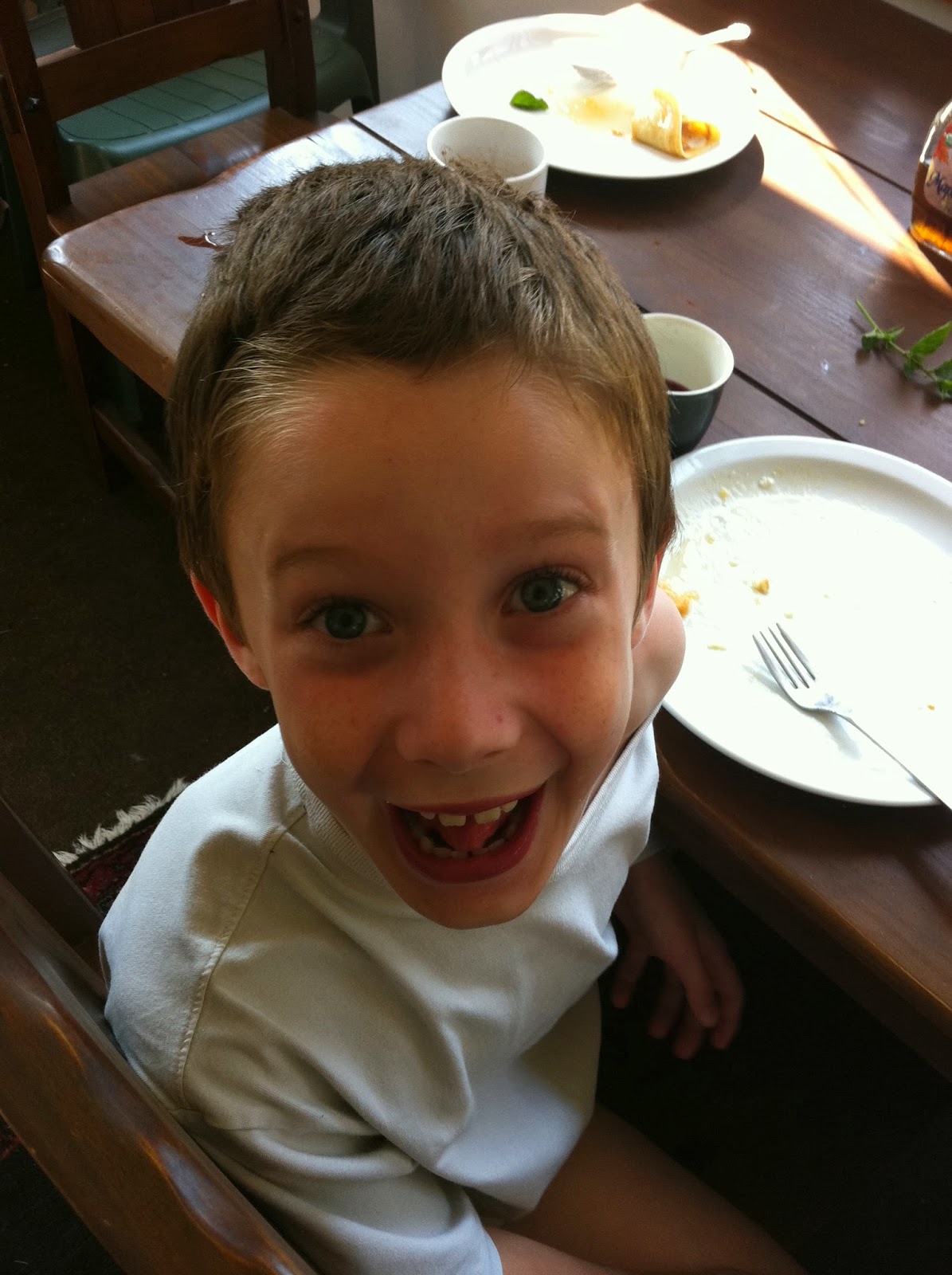
Lucian pipes up, his 10-year-old face is ethereal like an alabaster statue.
“It’s not just the terroir [his pronunciation is more like ‘terror’], Ma. It’s how you prepare it, too. Sometimes people can have really good smells that are ruined by a crappy coffee maker.”
We drive by a flooded, icy field overrun by water seeping out from the Housatonic River.
“Toxic terroir,” my daughter says under her breath. “Totally toxic.”
This is a darkly humorous bit about life as a rural mother and freelance writer in Western Massachusetts. Little Appalachia, if you will. The title, I feel, clearly reflects how life is coming at me like an overloaded freight train, and my own ridiculous response to it. Me VERSUS all; teenage children, people who want me to work for free, conservative government, food karma, weird menfolk. You'll either laugh, shrug your shoulders, or call DSS immediately. Happy reading.
Monday, March 24, 2014
Human terroir
Labels:
Berkshires,
Bolivia,
chocolate,
coffee,
Housatonic River,
human terroir,
sense of place,
terroir,
wine
Monday, March 3, 2014
Making a face
This past Saturday, a group of us mother-writer-warrior types gathered to give a reading as the opening event for the Berkshire Festival of Women Writers. The prompt was given to us awhile ago and was inspired by Taylor Mali's poem, What Teachers Make. For the group of us, we were asked to consider "what do mothers make?" We make messes, we make babies, we make babies cry, we make muffins and shitty one-dish recipes from Pinterest, we make fun of ourselves, we make coffee...We make essays. In case you weren't there to catch the live reading, here's my thoughts on what this mother makes.
I try not to make a face as the hairdresser runs a flaming hot iron down my daughter’s jet-black hair. What she is doing defies gravity. The afro that my girl came off of the bus with, the one we have all come to love and recognize from afar, is transformed into a smooth airstrip. She is only 11, but the hair makes her look 15. I sip my coffee. The winter sun disappears behind the trees. The afro is gone.
“What do you think?” They both look at me expectantly. My daughter’s eyebrow is raised, the hairdresser is excited. I am trapped.
“You look beautiful,” I say. “You look beautiful.”
And she does. She is a stunning child. Always has been. Now, with the hair, she looks more like me than ever, but brighter. So much brighter. I try not to make a face.
In the car, my coffee is gone. My mind is stuffed with sadness. My girl, the puffy-haired queen who came into the world fighting and screaming for her life, is disappeared and a woman now occupies the passenger seat.
“What do you really think, Ma?” Half of her face is lit by street lamps. The other half is a mystery.
“I really think you are the most beautiful girl I have ever seen. No matter what your hair looks like.”
I want to stop the car. To sweep her in a never-ending hug. To somehow make her understand the fierceness in me. But I keep driving. I try not to make a face.
My mother was good at not making a face. First, in fourth grade when I finally insisted that my waist-length Pocahontas hair needed to go. She made the appointment, she took me to the hairdresser; She watched as nearly two feet of my childhood was hacked from my little head and slithered down my back to the floor. She said she liked it. I was happy. She was happy. We went home happy.
My father nearly wept. “It’ll be much easier to manage,” my mother said nonchalantly from the kitchen. I watched my father’s face. “I’m still me,” I reassured him. “It’s still me. Besides, you shaved your beard.”
The haircut didn’t have quite the effect I was hoping for. I still had to do dishes. My mother made me wear stupid, Victorian-era outfits that I deliberately tried to sabotage at school. The yellow corduroy mini-dress mysteriously torn at the seam. The calico pinafore with the behemoth collar became filthy during a muddy kickball game.
“What happened to your dress?!” My mother always exclaimed, horrified.
“I told you, we had gym today.” I looked with envy at my brother’s overalls and t-shirt and short hair.
I tried not to make my daughter wear anything, remembering my mother’s attempts at disguising a cactus as a lily. For years, everyone thought my girl was a son. Her soccer jerseys and denim shorts did little to dispute the fact. Her afro was universal. I thought she was beautiful then. Even when people would ask “how old is he” I would correct them.
“SHE is eight,” I would say. I would say it with the same conviction when strangers asked if she was my foster child, or if she was adopted. They did not see the mirror of my face in her face. They did not see that we were of the same cloth. Hers was a bit darker, sure, but the eyes. The high cheekbones, the stubborn set of the mouth.
“SHE is mine” I said, so many times. I wanted them to know that I made this beautiful creature. That I alone and young and without resources raised up a healthy child in a sea of hard times. She was mine and I was hers.
I make her come with me everywhere I go. She tugs at my sleeve. Even now, as a teenager, she tugs at my sleeve while I am deep in conversation with this writer or that official or this teacher.
“Ma, we should go.”
I look right through her, mid-conversation. My eyes are ice and the air sucks out of the room (or the café, or right there on the sidewalk). The moment becomes awkward for everyone but me.
“Don’t interrupt me,” I say quietly. “Not ever.”
I nearly make her cry. She backs up slowly, just far enough to escape the frigid air, but close enough because she knows there is no place to go. And she knows that I will make her squirm in the car once the public pleasantries are finished. Her brother waits. He is patient with his mother who “knows everyone.” He makes me smile. In return, I make him a lot of hot chocolate. I cut him slack.
She makes no bones about my favoritism. If she only knew, if she only remembered what I made for her. The space that I carved out just for her. I made her a pink bedroom and I slept in the living room. I made her soups and cassoulet and soft biscuits, anything that would put a slow smile on her face. I poached eggs, I melted crayons, I took every small step with her; She never trailed behind me.
I made up the difference. I made her as proud as she made me.
Now, we are in the car, I am lecturing her. I make her cry.
“You are not the only person living in this house,” I yell. Her brother pretends to read the registration to the truck. My voice makes him uncomfortable.
“You have no right to treat anyone this way,” I am at full blast now. “Especially the people you live with. The people who are closest to you.”
She makes a face. “I’m not listening to this anymore.”
Then I put the nail in the coffin: “Is this how you show your love?”
We make amends after she gets off the bus. By the end of the day, we are speaking as if no rift occurred. As if the divide of psychological damage had been crossed by one bowl of matzo soup and one joke and one goodnight hug.
I make sure she knows that I love her. Because I do.
Later on in the week, I make a phone call. To the school.
“There is a group of them,” I say. “They’ve been calling her names on the bus. In the lunch line, behind her back. Sometimes to her face.”
“What kind of names,” they ask.
“Names like nigger,” I say. I make them uncomfortable. The word makes me sick. I want to go to each one of their ignorant houses and make them pay. Stuff their words into their foul mouths and make their parents weep with shame at how they have raised their children to speak to my daughter. The light of my days. The queen of my life. I make a sound in my throat. They assure me, they will take care of it.
I ask my girl about it. I ask her ‘how’d it go at school.’ She wasn’t going to tell me about the nasty remarks.
“It doesn’t make any difference to me,” she says between handfuls of popcorn. She is making a mess. I try not to notice. We are, after all, having a serious conversation.
“What do you mean it doesn’t make any difference?” How can she be so blasé when I am ready to go door-to-door ripping people’s throats out with my bare hands? This kind of rage makes me bulletproof.
“They’re not going to make me feel bad about myself, or make me get bad grades or make me lose my confidence if that’s what you’re worried about,” she says. She’s so on to me! My New Age mom attempt at preserving innocence and self-esteem and authenticity. I make a face.
“I can’t change who I am. They choose to be who they are,” she says. I wish she’d close her mouth while she chews. “I feel bad for them. I’m the one making a future for myself. Who gives a shit what a bunch of rednecks think about me?”
She’s made her point. I walk away, dumbfounded at her clear vision. Ruthless, but clear.
I make myself a cup of coffee and listen to her and her brother fight about what to watch for movie night Friday.
“How about Nemo,” I say from the kitchen, gripping my coffee, waiting for a fight.
“Good idea,” she says. I hear the DVD case pop open.
I made the right decision. For once, I made the right decision.
I try not to make a face as the hairdresser runs a flaming hot iron down my daughter’s jet-black hair. What she is doing defies gravity. The afro that my girl came off of the bus with, the one we have all come to love and recognize from afar, is transformed into a smooth airstrip. She is only 11, but the hair makes her look 15. I sip my coffee. The winter sun disappears behind the trees. The afro is gone.
“What do you think?” They both look at me expectantly. My daughter’s eyebrow is raised, the hairdresser is excited. I am trapped.
“You look beautiful,” I say. “You look beautiful.”
And she does. She is a stunning child. Always has been. Now, with the hair, she looks more like me than ever, but brighter. So much brighter. I try not to make a face.
In the car, my coffee is gone. My mind is stuffed with sadness. My girl, the puffy-haired queen who came into the world fighting and screaming for her life, is disappeared and a woman now occupies the passenger seat.
“What do you really think, Ma?” Half of her face is lit by street lamps. The other half is a mystery.
“I really think you are the most beautiful girl I have ever seen. No matter what your hair looks like.”
I want to stop the car. To sweep her in a never-ending hug. To somehow make her understand the fierceness in me. But I keep driving. I try not to make a face.
My mother was good at not making a face. First, in fourth grade when I finally insisted that my waist-length Pocahontas hair needed to go. She made the appointment, she took me to the hairdresser; She watched as nearly two feet of my childhood was hacked from my little head and slithered down my back to the floor. She said she liked it. I was happy. She was happy. We went home happy.
My father nearly wept. “It’ll be much easier to manage,” my mother said nonchalantly from the kitchen. I watched my father’s face. “I’m still me,” I reassured him. “It’s still me. Besides, you shaved your beard.”
The haircut didn’t have quite the effect I was hoping for. I still had to do dishes. My mother made me wear stupid, Victorian-era outfits that I deliberately tried to sabotage at school. The yellow corduroy mini-dress mysteriously torn at the seam. The calico pinafore with the behemoth collar became filthy during a muddy kickball game.
“What happened to your dress?!” My mother always exclaimed, horrified.
“I told you, we had gym today.” I looked with envy at my brother’s overalls and t-shirt and short hair.
I tried not to make my daughter wear anything, remembering my mother’s attempts at disguising a cactus as a lily. For years, everyone thought my girl was a son. Her soccer jerseys and denim shorts did little to dispute the fact. Her afro was universal. I thought she was beautiful then. Even when people would ask “how old is he” I would correct them.
“SHE is eight,” I would say. I would say it with the same conviction when strangers asked if she was my foster child, or if she was adopted. They did not see the mirror of my face in her face. They did not see that we were of the same cloth. Hers was a bit darker, sure, but the eyes. The high cheekbones, the stubborn set of the mouth.
“SHE is mine” I said, so many times. I wanted them to know that I made this beautiful creature. That I alone and young and without resources raised up a healthy child in a sea of hard times. She was mine and I was hers.
I make her come with me everywhere I go. She tugs at my sleeve. Even now, as a teenager, she tugs at my sleeve while I am deep in conversation with this writer or that official or this teacher.
“Ma, we should go.”
I look right through her, mid-conversation. My eyes are ice and the air sucks out of the room (or the café, or right there on the sidewalk). The moment becomes awkward for everyone but me.
“Don’t interrupt me,” I say quietly. “Not ever.”
I nearly make her cry. She backs up slowly, just far enough to escape the frigid air, but close enough because she knows there is no place to go. And she knows that I will make her squirm in the car once the public pleasantries are finished. Her brother waits. He is patient with his mother who “knows everyone.” He makes me smile. In return, I make him a lot of hot chocolate. I cut him slack.
She makes no bones about my favoritism. If she only knew, if she only remembered what I made for her. The space that I carved out just for her. I made her a pink bedroom and I slept in the living room. I made her soups and cassoulet and soft biscuits, anything that would put a slow smile on her face. I poached eggs, I melted crayons, I took every small step with her; She never trailed behind me.
I made up the difference. I made her as proud as she made me.
Now, we are in the car, I am lecturing her. I make her cry.
“You are not the only person living in this house,” I yell. Her brother pretends to read the registration to the truck. My voice makes him uncomfortable.
“You have no right to treat anyone this way,” I am at full blast now. “Especially the people you live with. The people who are closest to you.”
She makes a face. “I’m not listening to this anymore.”
Then I put the nail in the coffin: “Is this how you show your love?”
We make amends after she gets off the bus. By the end of the day, we are speaking as if no rift occurred. As if the divide of psychological damage had been crossed by one bowl of matzo soup and one joke and one goodnight hug.
I make sure she knows that I love her. Because I do.
Later on in the week, I make a phone call. To the school.
“There is a group of them,” I say. “They’ve been calling her names on the bus. In the lunch line, behind her back. Sometimes to her face.”
“What kind of names,” they ask.
“Names like nigger,” I say. I make them uncomfortable. The word makes me sick. I want to go to each one of their ignorant houses and make them pay. Stuff their words into their foul mouths and make their parents weep with shame at how they have raised their children to speak to my daughter. The light of my days. The queen of my life. I make a sound in my throat. They assure me, they will take care of it.
I ask my girl about it. I ask her ‘how’d it go at school.’ She wasn’t going to tell me about the nasty remarks.
“It doesn’t make any difference to me,” she says between handfuls of popcorn. She is making a mess. I try not to notice. We are, after all, having a serious conversation.
“What do you mean it doesn’t make any difference?” How can she be so blasé when I am ready to go door-to-door ripping people’s throats out with my bare hands? This kind of rage makes me bulletproof.
“They’re not going to make me feel bad about myself, or make me get bad grades or make me lose my confidence if that’s what you’re worried about,” she says. She’s so on to me! My New Age mom attempt at preserving innocence and self-esteem and authenticity. I make a face.
“I can’t change who I am. They choose to be who they are,” she says. I wish she’d close her mouth while she chews. “I feel bad for them. I’m the one making a future for myself. Who gives a shit what a bunch of rednecks think about me?”
She’s made her point. I walk away, dumbfounded at her clear vision. Ruthless, but clear.
I make myself a cup of coffee and listen to her and her brother fight about what to watch for movie night Friday.
“How about Nemo,” I say from the kitchen, gripping my coffee, waiting for a fight.
“Good idea,” she says. I hear the DVD case pop open.
I made the right decision. For once, I made the right decision.
Friday, January 31, 2014
Lean the other way
Last night my friend 'A' sent me a link to an article, this article to be exact. She was understandably enraged. These kinds of articles and news bring out a primal anger in most women I know. It’s similar, I think, to something James Baldwin wrote about in his potent essay, “Notes of a Native Son.” In that essay he remembers his dead father as an embittered man, stuck, by force, in a free-radical world of blatant racism and zero opportunity. Baldwin was headed that way himself, until an eye-opening experience in a night club shattered a tumbler full of whiskey, a mirror, and Baldwin’s growing hate. This was no way to live.
And he’s right, this is no way to live. But, as it stands right now, the doors seem permanently locked. The glass ceiling of equal pay is out of reach, and all I can do is sign petitions, rail vocally and verbally against this bullshit lack of balance, and cross my fingers that legislation will eventually pass that will bring my people, women, closer to equality.
It is 2014. Women make less than men. Period. And we wait. And women like me wonder what the scenario will be for our daughters (and our sons) in 10 years. My girl is weeks away from turning 13. A year away from signing her work papers and then delving off into the working world. One that sits atop a slick ramp. It’s not even ground. How do I prepare her for that? Or do I say nothing at all and let her figure it out.
“Screw this lean in shit,” 'A' said to me after reading the article. “We need to floor it!”
We do. We really do. I’ve been doing a little research for a project far afield of my usual writing life and the numbers for our humble county loom large and irreversible for women. And, being a writer and longtime observer of timelines and such, I know that these numbers, when projected onto the wall of the future, can produce some serious problems. Generations will be affected by this. Whole communities will fall, if we don’t reverse the tide.
Statistics only have meaning if you see yourself, or someone you love somewhere amidst the mathematical equation of human existence. When the equation reads: Women in Massachusetts earn on average, 22% less than men for full time work, women in Berkshire County earn roughly 24% less than their male counterparts. Additionally, Berkshire County reports a significantly higher percentage of female households (no husband present) with children under the age of 6 than the other three Western MA counties and the state average. Aaaanddd Berkshire County girls under the age of 5 have a poverty rate twice the state average (16%), at 34.8%.
The language is clean, practically medical, but the image is of flesh and blood and losing ground. A majority of women are raising kids on their own as the sole breadwinner of the house, yet they are paid significantly less than their male cohorts AND they and their children live in poverty.
Poverty, by the way, sucks. Ask me how I know. As any one of us women how we know. My friend 'B' gave a chilling explanation of how she stayed so thin raising her kids. It was the same story in my house, and in thousands of others across the county.
"Oh my god, who could afford food? The kids ate dinner and basically I ate what was left on their plate."
Can you imagine surviving on the leftovers of a toddler? I can. So many mornings, I'd lap up the last three bites of Cheerios, suck back the milk at the bottom of the bowl, then off to school we went. We kept the apartment at 55 degrees, sometimes cooler, in the coldest winter on record. And have to be thankful that we had a roof over our heads and that we hadn't run out of coffee or eggs or, god forbid, oil.
And none of us, were looking for handouts. Me and 'B' and 'A' reminisce with shame about the WIC checks, the angry people in line behind us at the grocery store, the stupid blue SNAP card that you could see from outer space, the judgment on the faces of the cashiers. Once, someone made a comment about my WIC purchases, and how they were taking too long. (By the way, WIC covers baby formula, peanut butter, cereal, milk, the basics so to speak.) I whipped around in a red rage, not prepared to ignore the comment.
"Would you rather we starve," I asked. "Are there no workhouses, no prisons?"
I finished up my transaction, my blood boiling. I was about to leave, then came back.
"I work," I hissed at the fella in the polyester khakis. "Full time. All the time. I went to friggin' Yale. Maybe if I made what you were making you wouldn't have to wait in line so goddamn long."
Not a proud moment. And not the last time.
Women don't want handouts. We are proud folk, the many that I know, and for all of that pride this system funnels us into prideless measures. The kids have to be fed. The rent has to be paid. We do what we can, knowing that if we made 25% more our lives would be totally different. What we wouldn't do with even $5,000 "extra" a year.
The myth of the alimony-sucking, child-support chasing freeloader is part of the problem. The other part, is simple. Pay us what you pay them. Why is that such a difficult move to make in the legislature? Pay us what you pay them. Free up the healthcare system, save millions on food stamps and subsidies and emergency assistance.
And watch as the next generation thrives because their mothers finally got a decent, fair wage.
Because we've fucking earned it.
And he’s right, this is no way to live. But, as it stands right now, the doors seem permanently locked. The glass ceiling of equal pay is out of reach, and all I can do is sign petitions, rail vocally and verbally against this bullshit lack of balance, and cross my fingers that legislation will eventually pass that will bring my people, women, closer to equality.
It is 2014. Women make less than men. Period. And we wait. And women like me wonder what the scenario will be for our daughters (and our sons) in 10 years. My girl is weeks away from turning 13. A year away from signing her work papers and then delving off into the working world. One that sits atop a slick ramp. It’s not even ground. How do I prepare her for that? Or do I say nothing at all and let her figure it out.
“Screw this lean in shit,” 'A' said to me after reading the article. “We need to floor it!”
We do. We really do. I’ve been doing a little research for a project far afield of my usual writing life and the numbers for our humble county loom large and irreversible for women. And, being a writer and longtime observer of timelines and such, I know that these numbers, when projected onto the wall of the future, can produce some serious problems. Generations will be affected by this. Whole communities will fall, if we don’t reverse the tide.
Statistics only have meaning if you see yourself, or someone you love somewhere amidst the mathematical equation of human existence. When the equation reads: Women in Massachusetts earn on average, 22% less than men for full time work, women in Berkshire County earn roughly 24% less than their male counterparts. Additionally, Berkshire County reports a significantly higher percentage of female households (no husband present) with children under the age of 6 than the other three Western MA counties and the state average. Aaaanddd Berkshire County girls under the age of 5 have a poverty rate twice the state average (16%), at 34.8%.
The language is clean, practically medical, but the image is of flesh and blood and losing ground. A majority of women are raising kids on their own as the sole breadwinner of the house, yet they are paid significantly less than their male cohorts AND they and their children live in poverty.
Poverty, by the way, sucks. Ask me how I know. As any one of us women how we know. My friend 'B' gave a chilling explanation of how she stayed so thin raising her kids. It was the same story in my house, and in thousands of others across the county.
"Oh my god, who could afford food? The kids ate dinner and basically I ate what was left on their plate."
Can you imagine surviving on the leftovers of a toddler? I can. So many mornings, I'd lap up the last three bites of Cheerios, suck back the milk at the bottom of the bowl, then off to school we went. We kept the apartment at 55 degrees, sometimes cooler, in the coldest winter on record. And have to be thankful that we had a roof over our heads and that we hadn't run out of coffee or eggs or, god forbid, oil.
And none of us, were looking for handouts. Me and 'B' and 'A' reminisce with shame about the WIC checks, the angry people in line behind us at the grocery store, the stupid blue SNAP card that you could see from outer space, the judgment on the faces of the cashiers. Once, someone made a comment about my WIC purchases, and how they were taking too long. (By the way, WIC covers baby formula, peanut butter, cereal, milk, the basics so to speak.) I whipped around in a red rage, not prepared to ignore the comment.
"Would you rather we starve," I asked. "Are there no workhouses, no prisons?"
I finished up my transaction, my blood boiling. I was about to leave, then came back.
"I work," I hissed at the fella in the polyester khakis. "Full time. All the time. I went to friggin' Yale. Maybe if I made what you were making you wouldn't have to wait in line so goddamn long."
Not a proud moment. And not the last time.
Women don't want handouts. We are proud folk, the many that I know, and for all of that pride this system funnels us into prideless measures. The kids have to be fed. The rent has to be paid. We do what we can, knowing that if we made 25% more our lives would be totally different. What we wouldn't do with even $5,000 "extra" a year.
The myth of the alimony-sucking, child-support chasing freeloader is part of the problem. The other part, is simple. Pay us what you pay them. Why is that such a difficult move to make in the legislature? Pay us what you pay them. Free up the healthcare system, save millions on food stamps and subsidies and emergency assistance.
And watch as the next generation thrives because their mothers finally got a decent, fair wage.
Because we've fucking earned it.
Tuesday, January 7, 2014
A lived life
About a year ago, I was asked to provide a list of ten things that have inspired me in my life; things that caught me off guard, buoyed me up, or brought me low. The pitch was that these vignettes would then, by some miracle, be turned into performance pieces that would run for a whole week to warm up the frigid mid-winter night. So, without much thought that these little vignettes would be performed for the public, I wrote them, sent them out, and then invited my mother and my boyfriend (now fiancée, he proposed on Christmas night, story to follow soon) to the performance. These little scenes of MY LIFE, my actual life, were laid before us all. Complete with music, actors, action, and some tears. So here it is, in no particular order of importance, my unofficial year in review. A life lived, and more scenes yet to unfold...
The admiration of a younger man
I had always admired his thick black hair from afar. He struggled a lot, and that struggle was made more romantic by his Spanish accent and his sad brown eyes. My heart always flipped a little when we would go to the restaurant and he would be at our table immediately, and the way he knew my name, and said it like he meant it. He and I talked a lot about love. His broken heart, my broken heart, of course, he was too young. Like six years is that big of a leap, but I have morals, you know. The divorce was awful, I never told him about the divorce, I didn't want him to think I was hinting at some impropriety.
Of course, at my age, what is improper? Truly?
I felt my eyes on his face a little too long. I didn't want to be one of those pathetic “older women” drowning in lust and loneliness. I stayed away from the restaurant to avoid even the possibility of feeling my own patheticness. Two years later, I was with my appropriately-aged, balding boyfriend when I saw my non-lover. It was my 35th birthday, he was drunk and he stopped us both in the street.
“This might make you both very uncomfortable,” he slurred, “but I asked for her number when I heard that she was single. I was very serious.” He turned to the boyfriend and shook his hand. “You are a lucky man,” he said with that adorable accent. “I should have asked for her number sooner.”
Upon realizing that everyone is transfixed by my stunning daughter
The auditorium is thick with breath and body heat. It seems like the whole town and their spawn have turned up for this 6th grade holiday music concert. Babies cry, elderly grandparents squirm and sweat in the self-contained humidity of the place. Suddenly, the whole room goes dark as pitch and the choristers file one-by-one onto the shabby risers.
They are all shades of pink and white dresses and black dress slacks; all heights and various stages of awkward gawkiness and obesity. It's a tough age. On the top riser, in the very back, shining under the lights, is a tall girl in a plum dress. Her hair, a barely contained Afro, holds a purple flower. She smiles and sings and giggles a little in between songs. No one can take their eyes off of her. No one. The audience is transfixed by her. I am transfixed by her. Such a beauty. Later, after the concert, people comment. “She's so grown up,” they say. “She's such a darling. What a beauty. I couldn't stop watching her.”
I see the girl in the foyer after the excitement dies down. A head taller than her peers, light years away, it seems, from their round faces and awkward smiles. I catch her eye. In the light, she is even more beautiful, like something in a museum, some ancient tablet filled with an inexplicable energy. I want to be nearer to the girl. She smiles broadly at me and waves. The sun comes up even though it's dark outside.
“Hey, Mom,” she says, “Could you hear me singing?”
The true origin of pleasure
The blonde crying in the corner is starting to irritate me. So is the young hipster/cyclist who claims he has “nothing better to do on a Friday night.” I regret leaving my socks out in the hallway, outside of the supposed sacred space where we have just finished an hour and a half of qi-gong and meditation. My face hurts from crying all afternoon. Twenty children are dead in a town I have never heard of until today. The people surrounding me are childless, sad, but relatively unconcerned, it seems, with the tragedy. One has just come out of a 7-day silent retreat somewhere in the mountains. A tanned, long-legged beauty came back from her trip to paradise early. I guess the beach wasn't doing it for her. She says she missed her mother. The meditation instructor looks familiar, I've met him before, he was living in a housing project, high as a kite, talking to me about struggling as a single father. Now he is here, he is clean. I am ready to bolt and not come back. The candles are burning low, the roses in the middle of the room are dying, my eyes are closed. Then a voice, his voice, low and a little too chill, slips through the silence.
“Remember, pleasure grows on the tree of sorrow.”
I breath hard and sigh. That explains everything.
The right to love
I went to my first lesbian wedding in D.C. It was beautiful, the brides were stunning, the flowers, the turquoise and orange cake...everything made me smile, and I got to wear a big ol' southern hat and wasn't in the least put off that I missed the Kentucky Derby because we were in the middle of the ceremony. A few months later, the country is exploding with weddings. New York, Washington, men and women who have spent a lifetime loving each other beyond the limits of culture, suddenly they are married and the world knows. I scrolled through at least 100 pictures of weddings that were a long time coming. I've always been a softie for true love.
The tie that binds
It always happens in the deepest, muddiest hours of the early morning. Just after midnight. I guess that's when he decides that he's too drunk to do anything but drive himself to the hospital. Of course, I will go, even though I have vowed a thousand times not to, to “leave his ass there” for all eternity. What has he ever done for me these last 10 years besides borrow money and ask for favors? But I go, of course I go, and I will most likely go every time, because I do not see a drunk with dirt under his fingernails, red-rimmed eyes and in sore need of a toothbrush. I still see a little boy with hair so blonde it shone gold in the sun, bare-chested and thin, and grinning from ear to ear because his big sister fixed his cap gun.
The perfect man
Soon, my son's voice will transform from the sweet, barely audible bird song to the thug-like drone of an adolescent pre-man. That is why, every day when he jumps off of the bus and comes bounding across the driveway to give me a hug, every day when I lean down and notice that he is smelling my hair, as he has done since he was a struggling infant, I remember what it is like to have the unconditional love of a good man. And I forgive him for dismantling nearly all of the kitchen appliances before 6 a.m.
Young farmers
The blazing heat rises off the fields before 8 a.m. Today, this is not New England but a Georgia plantation. But work must be done. The veggies need watering, the chickens need feeding, the coop needs cleaning, and the water needs to be changed. Oh, and then there's the weeds. All of those straggly soldiers that popped up during last night's rain. Out in the field, just behind the July haze, three young farmers, each with a college degree and a somewhat privileged past, are bent over a shriveled spinach row, heads adorned with bandanas and straw hats and sweat. From the road, it looks like a resurrected ritual.
A good cup of coffee
“Mom, you really need coffee in the morning, don't you?”
He has set up about 80 feet of plastic Matchbox racing track across the kitchen floor, and a make-shift bridge above connects the two counter tops.
“Yes, I really do.” I duck under the bridge, my knees creak and the shoddy structure shakes. I can smell the rich brew and taste it's nourishment. Thankfully, it is after my first sip that he lands the remote-controlled helicopter directly into the brimming bowl of cereal.
My third baby
The foal is standing out in the field alone, his head low to shield his eyes from the driving rain. I see him every day, motherless, his lean legs carrying him to grass and water where he can find it.
“How old is he,” I ask, admiring his stout shoulders. He could be on Roman battlefield. He is so noble.
“Three months. They wanted him weaned right away. I'm surprised he is still alive. My guess, he won't make it much longer.”
His name is Thor, and I sneak out to him every night at dusk to feed him, to lead him around with the makeshift rope bridle, to escape my life in the house of expectations. Sometimes, I've had a bit too much brandy, but Thor doesn't seem to mind. He runs to me when I call him. He nips at my shoulder, I bite his neck to teach him boundaries, just as any mother would do. He is mine.
“How much do you want for him?” I ask the woman, the same woman who demanded that he be torn from his own mother, the big lady who eats organic food, believes in Montessori schooling and teaches yoga and compassion out of her living room.
“Well, he is a good dressage prospect, I'm thinking at least $1,200.”
I hang up the phone. Less than a minute later her husband calls.
“I'm sorry about that,” he says. “My wife has no idea what she's talking about. We'll take the $300. And thank you for taking care of him. I feel so bad about...”
“You should stick to dogs,” I say and hang up again.
He is mine. And I am his. It's a simple story for once.
Hooking the big one
At 4:30 a.m. the boat slowly backs out of the dock, and the lights of the town fade as we head out into the Sound. The water is a black glass under a purple sky. The handsome skipper gestures to the swivel chair welded to the boat.
“Ladies first,” he says. I put out my cigarette on the bottom of my shoe and take a seat, gently easing the pole into my hands.
“I'm left handed,” I tell him. He shrugs his shoulders.
“Not today, you're not.”
The line is hissing in less than a minute, and I pull and reel and pull and reel, sweat gathering at the small of my back. My arms burn, there is already a crude pattern of scrapes on the inside of my wrists. I see the silver belly getting closer to the boat. I have him. I have him all to myself.
“It's a big one,” the skipper smiles.
For once, I have no interest in talking to a good-looking man. My focus is on the bass. He is the one I want. The last five feet of the line is the hardest fight. But, he is up, and in the bucket wriggling, defeated but beautiful.
“That's at least 25 pounds or more,” the skipper says, clapping me on the shoulder and handing me my smokes. “It's gonna be a good day for you.”
“What'd I tell ya,” the captain yells from his perch above us. “The women always catch the monsters.”
The admiration of a younger man
I had always admired his thick black hair from afar. He struggled a lot, and that struggle was made more romantic by his Spanish accent and his sad brown eyes. My heart always flipped a little when we would go to the restaurant and he would be at our table immediately, and the way he knew my name, and said it like he meant it. He and I talked a lot about love. His broken heart, my broken heart, of course, he was too young. Like six years is that big of a leap, but I have morals, you know. The divorce was awful, I never told him about the divorce, I didn't want him to think I was hinting at some impropriety.
Of course, at my age, what is improper? Truly?
I felt my eyes on his face a little too long. I didn't want to be one of those pathetic “older women” drowning in lust and loneliness. I stayed away from the restaurant to avoid even the possibility of feeling my own patheticness. Two years later, I was with my appropriately-aged, balding boyfriend when I saw my non-lover. It was my 35th birthday, he was drunk and he stopped us both in the street.
“This might make you both very uncomfortable,” he slurred, “but I asked for her number when I heard that she was single. I was very serious.” He turned to the boyfriend and shook his hand. “You are a lucky man,” he said with that adorable accent. “I should have asked for her number sooner.”
Upon realizing that everyone is transfixed by my stunning daughter
The auditorium is thick with breath and body heat. It seems like the whole town and their spawn have turned up for this 6th grade holiday music concert. Babies cry, elderly grandparents squirm and sweat in the self-contained humidity of the place. Suddenly, the whole room goes dark as pitch and the choristers file one-by-one onto the shabby risers.
They are all shades of pink and white dresses and black dress slacks; all heights and various stages of awkward gawkiness and obesity. It's a tough age. On the top riser, in the very back, shining under the lights, is a tall girl in a plum dress. Her hair, a barely contained Afro, holds a purple flower. She smiles and sings and giggles a little in between songs. No one can take their eyes off of her. No one. The audience is transfixed by her. I am transfixed by her. Such a beauty. Later, after the concert, people comment. “She's so grown up,” they say. “She's such a darling. What a beauty. I couldn't stop watching her.”
I see the girl in the foyer after the excitement dies down. A head taller than her peers, light years away, it seems, from their round faces and awkward smiles. I catch her eye. In the light, she is even more beautiful, like something in a museum, some ancient tablet filled with an inexplicable energy. I want to be nearer to the girl. She smiles broadly at me and waves. The sun comes up even though it's dark outside.
“Hey, Mom,” she says, “Could you hear me singing?”
The true origin of pleasure
The blonde crying in the corner is starting to irritate me. So is the young hipster/cyclist who claims he has “nothing better to do on a Friday night.” I regret leaving my socks out in the hallway, outside of the supposed sacred space where we have just finished an hour and a half of qi-gong and meditation. My face hurts from crying all afternoon. Twenty children are dead in a town I have never heard of until today. The people surrounding me are childless, sad, but relatively unconcerned, it seems, with the tragedy. One has just come out of a 7-day silent retreat somewhere in the mountains. A tanned, long-legged beauty came back from her trip to paradise early. I guess the beach wasn't doing it for her. She says she missed her mother. The meditation instructor looks familiar, I've met him before, he was living in a housing project, high as a kite, talking to me about struggling as a single father. Now he is here, he is clean. I am ready to bolt and not come back. The candles are burning low, the roses in the middle of the room are dying, my eyes are closed. Then a voice, his voice, low and a little too chill, slips through the silence.
“Remember, pleasure grows on the tree of sorrow.”
I breath hard and sigh. That explains everything.
The right to love
I went to my first lesbian wedding in D.C. It was beautiful, the brides were stunning, the flowers, the turquoise and orange cake...everything made me smile, and I got to wear a big ol' southern hat and wasn't in the least put off that I missed the Kentucky Derby because we were in the middle of the ceremony. A few months later, the country is exploding with weddings. New York, Washington, men and women who have spent a lifetime loving each other beyond the limits of culture, suddenly they are married and the world knows. I scrolled through at least 100 pictures of weddings that were a long time coming. I've always been a softie for true love.
The tie that binds
It always happens in the deepest, muddiest hours of the early morning. Just after midnight. I guess that's when he decides that he's too drunk to do anything but drive himself to the hospital. Of course, I will go, even though I have vowed a thousand times not to, to “leave his ass there” for all eternity. What has he ever done for me these last 10 years besides borrow money and ask for favors? But I go, of course I go, and I will most likely go every time, because I do not see a drunk with dirt under his fingernails, red-rimmed eyes and in sore need of a toothbrush. I still see a little boy with hair so blonde it shone gold in the sun, bare-chested and thin, and grinning from ear to ear because his big sister fixed his cap gun.
The perfect man
Soon, my son's voice will transform from the sweet, barely audible bird song to the thug-like drone of an adolescent pre-man. That is why, every day when he jumps off of the bus and comes bounding across the driveway to give me a hug, every day when I lean down and notice that he is smelling my hair, as he has done since he was a struggling infant, I remember what it is like to have the unconditional love of a good man. And I forgive him for dismantling nearly all of the kitchen appliances before 6 a.m.
Young farmers
The blazing heat rises off the fields before 8 a.m. Today, this is not New England but a Georgia plantation. But work must be done. The veggies need watering, the chickens need feeding, the coop needs cleaning, and the water needs to be changed. Oh, and then there's the weeds. All of those straggly soldiers that popped up during last night's rain. Out in the field, just behind the July haze, three young farmers, each with a college degree and a somewhat privileged past, are bent over a shriveled spinach row, heads adorned with bandanas and straw hats and sweat. From the road, it looks like a resurrected ritual.
A good cup of coffee
“Mom, you really need coffee in the morning, don't you?”
He has set up about 80 feet of plastic Matchbox racing track across the kitchen floor, and a make-shift bridge above connects the two counter tops.
“Yes, I really do.” I duck under the bridge, my knees creak and the shoddy structure shakes. I can smell the rich brew and taste it's nourishment. Thankfully, it is after my first sip that he lands the remote-controlled helicopter directly into the brimming bowl of cereal.
My third baby
The foal is standing out in the field alone, his head low to shield his eyes from the driving rain. I see him every day, motherless, his lean legs carrying him to grass and water where he can find it.
“How old is he,” I ask, admiring his stout shoulders. He could be on Roman battlefield. He is so noble.
“Three months. They wanted him weaned right away. I'm surprised he is still alive. My guess, he won't make it much longer.”
His name is Thor, and I sneak out to him every night at dusk to feed him, to lead him around with the makeshift rope bridle, to escape my life in the house of expectations. Sometimes, I've had a bit too much brandy, but Thor doesn't seem to mind. He runs to me when I call him. He nips at my shoulder, I bite his neck to teach him boundaries, just as any mother would do. He is mine.
“How much do you want for him?” I ask the woman, the same woman who demanded that he be torn from his own mother, the big lady who eats organic food, believes in Montessori schooling and teaches yoga and compassion out of her living room.
“Well, he is a good dressage prospect, I'm thinking at least $1,200.”
I hang up the phone. Less than a minute later her husband calls.
“I'm sorry about that,” he says. “My wife has no idea what she's talking about. We'll take the $300. And thank you for taking care of him. I feel so bad about...”
“You should stick to dogs,” I say and hang up again.
He is mine. And I am his. It's a simple story for once.
Hooking the big one
At 4:30 a.m. the boat slowly backs out of the dock, and the lights of the town fade as we head out into the Sound. The water is a black glass under a purple sky. The handsome skipper gestures to the swivel chair welded to the boat.
“Ladies first,” he says. I put out my cigarette on the bottom of my shoe and take a seat, gently easing the pole into my hands.
“I'm left handed,” I tell him. He shrugs his shoulders.
“Not today, you're not.”
The line is hissing in less than a minute, and I pull and reel and pull and reel, sweat gathering at the small of my back. My arms burn, there is already a crude pattern of scrapes on the inside of my wrists. I see the silver belly getting closer to the boat. I have him. I have him all to myself.
“It's a big one,” the skipper smiles.
For once, I have no interest in talking to a good-looking man. My focus is on the bass. He is the one I want. The last five feet of the line is the hardest fight. But, he is up, and in the bucket wriggling, defeated but beautiful.
“That's at least 25 pounds or more,” the skipper says, clapping me on the shoulder and handing me my smokes. “It's gonna be a good day for you.”
“What'd I tell ya,” the captain yells from his perch above us. “The women always catch the monsters.”
Labels:
fishing,
mothering,
vignettes,
year in review,
younger man
Monday, December 2, 2013
Happy Hunting
The way my brother tells it, it was a quiet morning in the woods. Just him, his shotgun, a few cigarettes and a weak sunrise. From his old tree stand, he spotted a decent-sized buck, quietly took aim, and shot the thing in the pre-dawn light.
Unfortunately, the deer didn't drop to the wet ground. He ran. Fast. Bounding from bush to bush, staggering at times, and leaving a trail of blood and broken sticks for my brother to follow. Which, as any good hunter would, he did. The distance he covered to track the deer has been a subject of debate and memory for years. A mile and a half through the frigid winter. Where he found his target finally, and summarily dead. He should have been overjoyed...the smell of venison stew filling his nostrils as he hoisted the near 200-lb creature (again, this detail may be the victim of fuzzy memory) and dragged it out of the woods on foot. The entire time, while he is imagining the waft of venison steaks filling his kitchen, the deer had other plans.
"I noticed he didn't smell right," my brother recalled in his 50th retelling of the tale. "He stunk. Bad."
The stink didn't go away when they prepped the deer for skinning and butchering in the woodshed. His impressive rack was a footnote to the odor coming off of him.
"I knew it was gonna be bad," my younger brother chimed in. He was there in the tiny woodshed to "help" clean the impressive beast. "That smell was ripe. It had a tangy, piss smell. As soon as they opened it up we all ran out of the shed and started f***king dry-heaving in the snow."
It is unclear what the smell was. In earlier accounts, my older brother (we mercilessly refer to him as "the huntsman" for this and other tales of bad luck with deer, one involving getting a truck stuck in the middle of a cornfield, the other referring to a sheetrock knife that didn't quite do its job...)swears he shot the thing through its bladder. In other renditions of the story, the buck already had blood poisoning from a previous hunter's bullet, and my brother may have done the poor thing a favor.
Either way, the loss of all that meat was a tragedy. We all felt it because we were all guilty of smelling the imaginary venison wafting through our homes as we prepped a pioneer Sunday dinner. My brothers felt bad for the thing.
"I can't imagine running through the woods shot through the pisser," one said. "I mean, man."
Of course, given it's impressive antlers, my older brother did take one trophy from the ill-fortuned hunt: The head. Bucky is mounted on the living room wall. He looks a little greyish and mangy. Not the bright-eyed noble stag of cabin lore. He is a monument to an effort. And the only part of that deer that wasn't laid to waste in the woods behind my brother's house.
"Not even the huskies would go near it," he said of his pack of sled dogs who are opportunists when it comes to food of any kind.
It is the opening day of shotgun season here. I've already heard the irregular pops off in the woods. Our abandoned road is busy (sort of) with trucks full of hunters hoping to snag Bambi's father before the big freeze sends us all inside, unable even to hunt for root vegetables or anything wild. I hold out hope that I will be sizzling up some venison sausage in the coming weeks. But I know that food karma trumps my sausage and my desires for a hearty breakfast courtesy of nature's wild.
Food karma has been driving my eating habits for a long time, since I was pregnant with my first child nearly 14 years ago. It has become impossible to purchase meat from the grocery store. Even the Thanksgiving table is a source of anxiety, wondering where that turkey came from and wondering about the nature of his death (and life) and what kind of bad juju I'm putting into my body while trying to enjoy the tender dark meat. What if it suffered terribly? What if its life was one of complete misery jammed into an industrial pen, waiting to die? I think this. I feel bad. I say prayers of thanks to the turkey and hope that it hears me. And that my guts are not immediately entangled in a karma battle that plays out on the bathroom floor ('cause that's happened, too).
The food chain is exactly that. It is a chain, snapped snugly around our human wrists. If we pull on the chain too hard, it's gonna hurt like a bitch. If we don't pull at all, we starve in a sense. I am chained to the lives of these animals (and vegetables, let's not forget the karma of Monsanto that is spreading havoc across the world with cancer, dead honey bees, obesity and the ousting of small time farmers) and my need to know outweighs my longing for neatly packaged bacon.
We will make it through the winter, with or without Bucky. My freezer is full of meat from the farm just down the road and fish that we ourselves yanked up from the water (and I silently prayed over as their throats were being cut and their heads were tossed into the sea, chum for the birds). It's a small gratitude for a big sacrifice.
Bucky watches over us, his eyes seeking us out across the living room. Conversations over coffee are conducted under his nose. Birthday cake is devoured across the room. Meatballs are speared with toothpicks. As I am chewing on a hamburger, I swear I see him wince.
Unfortunately, the deer didn't drop to the wet ground. He ran. Fast. Bounding from bush to bush, staggering at times, and leaving a trail of blood and broken sticks for my brother to follow. Which, as any good hunter would, he did. The distance he covered to track the deer has been a subject of debate and memory for years. A mile and a half through the frigid winter. Where he found his target finally, and summarily dead. He should have been overjoyed...the smell of venison stew filling his nostrils as he hoisted the near 200-lb creature (again, this detail may be the victim of fuzzy memory) and dragged it out of the woods on foot. The entire time, while he is imagining the waft of venison steaks filling his kitchen, the deer had other plans.
"I noticed he didn't smell right," my brother recalled in his 50th retelling of the tale. "He stunk. Bad."
The stink didn't go away when they prepped the deer for skinning and butchering in the woodshed. His impressive rack was a footnote to the odor coming off of him.
"I knew it was gonna be bad," my younger brother chimed in. He was there in the tiny woodshed to "help" clean the impressive beast. "That smell was ripe. It had a tangy, piss smell. As soon as they opened it up we all ran out of the shed and started f***king dry-heaving in the snow."
It is unclear what the smell was. In earlier accounts, my older brother (we mercilessly refer to him as "the huntsman" for this and other tales of bad luck with deer, one involving getting a truck stuck in the middle of a cornfield, the other referring to a sheetrock knife that didn't quite do its job...)swears he shot the thing through its bladder. In other renditions of the story, the buck already had blood poisoning from a previous hunter's bullet, and my brother may have done the poor thing a favor.
Either way, the loss of all that meat was a tragedy. We all felt it because we were all guilty of smelling the imaginary venison wafting through our homes as we prepped a pioneer Sunday dinner. My brothers felt bad for the thing.
"I can't imagine running through the woods shot through the pisser," one said. "I mean, man."
Of course, given it's impressive antlers, my older brother did take one trophy from the ill-fortuned hunt: The head. Bucky is mounted on the living room wall. He looks a little greyish and mangy. Not the bright-eyed noble stag of cabin lore. He is a monument to an effort. And the only part of that deer that wasn't laid to waste in the woods behind my brother's house.
"Not even the huskies would go near it," he said of his pack of sled dogs who are opportunists when it comes to food of any kind.
It is the opening day of shotgun season here. I've already heard the irregular pops off in the woods. Our abandoned road is busy (sort of) with trucks full of hunters hoping to snag Bambi's father before the big freeze sends us all inside, unable even to hunt for root vegetables or anything wild. I hold out hope that I will be sizzling up some venison sausage in the coming weeks. But I know that food karma trumps my sausage and my desires for a hearty breakfast courtesy of nature's wild.
Food karma has been driving my eating habits for a long time, since I was pregnant with my first child nearly 14 years ago. It has become impossible to purchase meat from the grocery store. Even the Thanksgiving table is a source of anxiety, wondering where that turkey came from and wondering about the nature of his death (and life) and what kind of bad juju I'm putting into my body while trying to enjoy the tender dark meat. What if it suffered terribly? What if its life was one of complete misery jammed into an industrial pen, waiting to die? I think this. I feel bad. I say prayers of thanks to the turkey and hope that it hears me. And that my guts are not immediately entangled in a karma battle that plays out on the bathroom floor ('cause that's happened, too).
The food chain is exactly that. It is a chain, snapped snugly around our human wrists. If we pull on the chain too hard, it's gonna hurt like a bitch. If we don't pull at all, we starve in a sense. I am chained to the lives of these animals (and vegetables, let's not forget the karma of Monsanto that is spreading havoc across the world with cancer, dead honey bees, obesity and the ousting of small time farmers) and my need to know outweighs my longing for neatly packaged bacon.
We will make it through the winter, with or without Bucky. My freezer is full of meat from the farm just down the road and fish that we ourselves yanked up from the water (and I silently prayed over as their throats were being cut and their heads were tossed into the sea, chum for the birds). It's a small gratitude for a big sacrifice.
Bucky watches over us, his eyes seeking us out across the living room. Conversations over coffee are conducted under his nose. Birthday cake is devoured across the room. Meatballs are speared with toothpicks. As I am chewing on a hamburger, I swear I see him wince.
Thursday, November 14, 2013
Let her loose
There have been numerous opportunities to escape this madness. My friend A and I were driving on the NY state thruway, up into the Adirondacks, and we saw the sign for the Montreal exit. She slowed down. I started breathing funny.
"God, just do it," I said.
"Montreal?" The car was crawling in the right lane.
I paused, lit a cigarette, exhaled and sighed a long, sad sigh.
"Nah. Wouldn't be far enough."
"So true."
I'm not sure what I meant. "It wouldn't be far enough." Certainly, at some point, family members would come looking for me. My cell phone would heat up with texts and calls and frantic voicemails--Where are you? Are you OK? Do you want me to send your father? Nichole, this is your mother, get your ass back here right now...I would have to ditch the phone in a motel toilet. Then keep driving.
But how far would "far enough" really be? How far would I have to run to drown out the cacophony of responsibility and obligation? Because it's not the external sound of loved ones and friends that cuts through the desperate desire to just keep driving into the sunset.
It's the piercing scream inside. The one that would go on forever if I (we) left it all behind, took up a new self, and never looked back into the wake of what I had created.
"I could fake my own death..."
"Nah, your Ma would find you."
I had a classmate back in grammar school. We were all totally jealous of her...or "totes jelly" as my daughter would say, which continues to drive me nuts. That and "whatevs" and "adorbs."
Totally fucking nuts.
Our envy, turns out, was unwarranted. Her beauty, her great perm, her amazingly expensive collection of high-top Reeboks couldn't fill the void that her mother left when she jetted off to Hollywood, leaving my classmate and her little brother floating aimlessly in a state of motherlessness.
It's one thing to be fatherless...I mean, 35% of children in this country (actually, most likely the number is higher) are being raised by single mothers. This is not to say that not having a dad around is cool. Cause it isn't. Good dads are solid and fun, average dads at least make you feel safe and not listless.
But no mom. Who is tethering you to the earth? Who is making sure that your soccer uniform is clean for the third day in a row and that your pants aren't too high at the ankle and that you hold the door for elderly people and that you drink a full glass of water upon waking up and that you take your Vitamin D every day, twice a day in winter 'cause you're white and black? Who?
I always felt empathy for my friend. With her mom choosing to be so far away. I talked about it with my mother once, while she was fixing yet another shirt that I'd ripped.
"Those poor kids. They'll never forgive her."
But as I close in on 40, and my daughter rages alternately between tenderness and narcissism and my son fights me on every shower and homework assignment and my job prospects as a writer are limited and I can't get Ethiopian food or crawdads...running away seems to have its merits.
I look at that mother from years past, fleeing to that greener pasture, and how can I judge her? I mean, I can, but it wouldn't be an honest judgment. Who doesn't seek adventure? A new lease on life? Maya Angelou left her young son back in the states while she toured as a dancer for "Porgy and Bess." All through Europe, gone and gone. She had a blast. Took lovers of all nationalities, saw the world, drank good wine, hit the beaches in Greece. And not once did she seem to regret the decision. She made a good living. She supported her son while he lived with her mother.
The other day, I made an off-hand remark about going to Italy for a few months on a writer's retreat. I was daydreaming in front of my mother. She didn't look outwardly horrified but...
"Oh god, you couldn't leave the continent. You'd be too anxious about the kids. You'd never be able to relax. And forget taking a lover."
I nodded. Yet I could smell the Mediterranean as the bus pulled up and ejected my two ragged children from its squeaky bowels. I imagined myself there, alone, writing, hitting the beach, smoking, drinking good coffee and wine, wandering through vineyards...blissfully alone.
"Ma, what's for dinner?"
"What are we doing tonight?"
"I need new ear buds."
"Can we go to Olympia?"
"C'est va, guys. My day was good. Thanks for asking."
I'm in too deep. I know what I'd miss while sunning myself on volcanic rock. I would miss my daughter's first goal ever in soccer. I would miss the look on my son's tuba solo (yeah, they actually have tuba solos). I would miss my nephew's first varsity football game. I would miss random Instagram messages from my niece where she has a dog nose and a flower crown. I'd miss watching my papa get tipsy on egg nog at the Reveillon.
I'd be lying if I said the urge has gone away. It never does. Sometimes at night I count the years until my son graduates from high school. And I think of ways to fill those years with travel to obscure towns and islands and experiences and people...until I can finally disappear into the nighttime throng on Frenchman Street or some remote beach in Sardinia--pen, paper, bikini, thick-haired Adonis with a Ducati...
"Ma?"
"Yeah, papi?"
"Can I live with you until I'm at least 25?"
"God, just do it," I said.
"Montreal?" The car was crawling in the right lane.
I paused, lit a cigarette, exhaled and sighed a long, sad sigh.
"Nah. Wouldn't be far enough."
"So true."
I'm not sure what I meant. "It wouldn't be far enough." Certainly, at some point, family members would come looking for me. My cell phone would heat up with texts and calls and frantic voicemails--Where are you? Are you OK? Do you want me to send your father? Nichole, this is your mother, get your ass back here right now...I would have to ditch the phone in a motel toilet. Then keep driving.
But how far would "far enough" really be? How far would I have to run to drown out the cacophony of responsibility and obligation? Because it's not the external sound of loved ones and friends that cuts through the desperate desire to just keep driving into the sunset.
It's the piercing scream inside. The one that would go on forever if I (we) left it all behind, took up a new self, and never looked back into the wake of what I had created.
"I could fake my own death..."
"Nah, your Ma would find you."
I had a classmate back in grammar school. We were all totally jealous of her...or "totes jelly" as my daughter would say, which continues to drive me nuts. That and "whatevs" and "adorbs."
Totally fucking nuts.
Our envy, turns out, was unwarranted. Her beauty, her great perm, her amazingly expensive collection of high-top Reeboks couldn't fill the void that her mother left when she jetted off to Hollywood, leaving my classmate and her little brother floating aimlessly in a state of motherlessness.
It's one thing to be fatherless...I mean, 35% of children in this country (actually, most likely the number is higher) are being raised by single mothers. This is not to say that not having a dad around is cool. Cause it isn't. Good dads are solid and fun, average dads at least make you feel safe and not listless.
But no mom. Who is tethering you to the earth? Who is making sure that your soccer uniform is clean for the third day in a row and that your pants aren't too high at the ankle and that you hold the door for elderly people and that you drink a full glass of water upon waking up and that you take your Vitamin D every day, twice a day in winter 'cause you're white and black? Who?
I always felt empathy for my friend. With her mom choosing to be so far away. I talked about it with my mother once, while she was fixing yet another shirt that I'd ripped.
"Those poor kids. They'll never forgive her."
But as I close in on 40, and my daughter rages alternately between tenderness and narcissism and my son fights me on every shower and homework assignment and my job prospects as a writer are limited and I can't get Ethiopian food or crawdads...running away seems to have its merits.
I look at that mother from years past, fleeing to that greener pasture, and how can I judge her? I mean, I can, but it wouldn't be an honest judgment. Who doesn't seek adventure? A new lease on life? Maya Angelou left her young son back in the states while she toured as a dancer for "Porgy and Bess." All through Europe, gone and gone. She had a blast. Took lovers of all nationalities, saw the world, drank good wine, hit the beaches in Greece. And not once did she seem to regret the decision. She made a good living. She supported her son while he lived with her mother.
The other day, I made an off-hand remark about going to Italy for a few months on a writer's retreat. I was daydreaming in front of my mother. She didn't look outwardly horrified but...
"Oh god, you couldn't leave the continent. You'd be too anxious about the kids. You'd never be able to relax. And forget taking a lover."
I nodded. Yet I could smell the Mediterranean as the bus pulled up and ejected my two ragged children from its squeaky bowels. I imagined myself there, alone, writing, hitting the beach, smoking, drinking good coffee and wine, wandering through vineyards...blissfully alone.
"Ma, what's for dinner?"
"What are we doing tonight?"
"I need new ear buds."
"Can we go to Olympia?"
"C'est va, guys. My day was good. Thanks for asking."
I'm in too deep. I know what I'd miss while sunning myself on volcanic rock. I would miss my daughter's first goal ever in soccer. I would miss the look on my son's tuba solo (yeah, they actually have tuba solos). I would miss my nephew's first varsity football game. I would miss random Instagram messages from my niece where she has a dog nose and a flower crown. I'd miss watching my papa get tipsy on egg nog at the Reveillon.
I'd be lying if I said the urge has gone away. It never does. Sometimes at night I count the years until my son graduates from high school. And I think of ways to fill those years with travel to obscure towns and islands and experiences and people...until I can finally disappear into the nighttime throng on Frenchman Street or some remote beach in Sardinia--pen, paper, bikini, thick-haired Adonis with a Ducati...
"Ma?"
"Yeah, papi?"
"Can I live with you until I'm at least 25?"
Monday, September 23, 2013
Not accounted for
I had a distinct and healthy fear when I was a teenager (and before and after) that if I did something bad, something bad would happen in return. I wish I could say that I was sophisticated and wise enough, at that point in time, to understand the workings of karma. I was not. I lived in the moment as most youngsters do. I did, however, understand the workings of consequences. That was made plain before I was old enough to walk. If I hit my brother, I would go to my room and lose a favorite toy. If I sassed a teacher, I'd be made to sit in the corner of the classroom, or, on rare occasion, take residence on the bench of shame outside the principal's office while they phoned my mother.
As was the case with most of my peers, I'd rather face the principal than my parents.
And it's not as if my folks were violent, unpredictable people. Spankings were economically doled out for those times when I simply didn't listen to the 3 or so verbal warnings prior to my offense. As I got older, the consequences of my actions remained relevant. Caught smoking or drinking...there goes your social life for at least a month or more. Or worse, expulsion from school, or even worse, getting kicked off the team, whatever team it was. The knowledge that I wouldn't be pitching for a softball season, or allowed to go out with my friends, or to get a ride to work kept me pretty much in line. Sure, I still did the stupid shit that kids do, but the risk was so high -- in my mind at least -- that it had to be worth it. And eventually I did get in trouble, and for the most part accepted the consequences of being and idiot.
I got caught, I paid my dues splitting wood and in social exile. I didn't get caught, I spent months worrying that eventually I would. Basic stuff.
Not so basic, it would seem, in this era of enablement that has completely paralyzed our country. Recently, a local story caught my eye and my ire. Apparently, nearly 300 high school students broke into the home of former NFL player Brian Holloway. Holloway was at his primary residence in Florida. This residence is in New York state. Anyway, long story short, the little shits trashed his house, pissed all over the floor, broke stuff, and basically had a drunken free-for-all. And, of course, they posted their criminal antics in real time on Facebook and Twitter. Good going, dip shits.
Holloway did NOT press charges. Instead, he put a call out to the teens and their parents to help him clean up the damage and do some community service work. Guess what, one kid showed up. One out of 300. And some of the parents are threatening to SUE Holloway, ya know, the victim, for identifying the kids online. (Actually, I think he just identified the schools they go to, based on, ya know, their tweets.) I don't know who to slap first, the parents or the kids...You figure that's nearly 600 parents who did not respond to an opportunity for their kids to learn a lesson and NOT be arrested. I'd be all over that with several hundred 'thank yous' on my lips for Holloway. My kid would be scrubbing his goddamn floor with a toothbrush.
Where have we gone to, folks? Where is the dignity in doing what is right and accepting responsibility for what you did wrong? And you're going to unleash your child on the world, send him/her off to college not knowing that there are consequences for everything. That Mommy and Daddy will not be there to save your ass when you get yourself into hot water.
I have been a high school teacher. And I watched as over the years, the parents of my students became increasingly enabling. One parent, who was a guidance counselor at another school, called me and told me that she hated me because her son was failing a film class. A film class! You know, where you watch movies and take notes and just be chill and learn stuff. I told her I'd called, sent notes home, so why is she surprised?
"I never got those notes," she stammered. I knew she was lying. Immediately. But still, at the end of the day, I was "strongly encouraged" to allow her son, a sports player, an honors student, blah blah blah, to make up the work so he could pass. At the end of the session, he "passed" the class by one point.
"Thanks, Ms. D." He handed me his nearly empty notebook.
"Don't thank me," I said, not even making eye contact. "Thank your mother."
He turned a million shades of red. "You'd do the same for your son."
Then I made eye contact.
"That's where you're wrong, man. I wouldn't. I'd watch him squirm and fret and fail the class out of sheer laziness. Lesson learned. That's my job. To make sure the lessons sink in. But I'm not worried about my son. He's not the baby here."
He moved to say more, I just put up my hand. "Enough. I'm not getting paid to make you feel better about yourself. Good luck in the real world."
I don't know whatever happened to that kid. I think he dropped out of college, lives with his parents, still borrows money. Probably like a majority of other teens who never learned the right lessons. We have a whole generation of pansies coming through the ranks right now. Kids in their 20s who can't hold a job, still have their mothers call in sick for them, have never paid for rent or groceries. They have nothing to be proud of. Least of all themselves. They never learned those lessons. They never learned that when your ass is on fire, you're the only one who can douse the flame. Or make it bigger. Your choice. It's your choice every single time.
My kids know I've got their back. They also know, beyond doubt, that I will not be the one who swoops in and rescues them from themselves. You don't clean your room, you don't go to the sleepover. You don't do your homework, you don't go to football practice. Simple as that.
It scares me to know that those 300 kids may have avoided life's most valuable lesson. And that one day, they will be walking the same streets with my kids.
Nobody ever said parenting is easy. It's not. But it's simple. Do the right thing. Every time. And your kids will follow.
As was the case with most of my peers, I'd rather face the principal than my parents.
And it's not as if my folks were violent, unpredictable people. Spankings were economically doled out for those times when I simply didn't listen to the 3 or so verbal warnings prior to my offense. As I got older, the consequences of my actions remained relevant. Caught smoking or drinking...there goes your social life for at least a month or more. Or worse, expulsion from school, or even worse, getting kicked off the team, whatever team it was. The knowledge that I wouldn't be pitching for a softball season, or allowed to go out with my friends, or to get a ride to work kept me pretty much in line. Sure, I still did the stupid shit that kids do, but the risk was so high -- in my mind at least -- that it had to be worth it. And eventually I did get in trouble, and for the most part accepted the consequences of being and idiot.
I got caught, I paid my dues splitting wood and in social exile. I didn't get caught, I spent months worrying that eventually I would. Basic stuff.
Not so basic, it would seem, in this era of enablement that has completely paralyzed our country. Recently, a local story caught my eye and my ire. Apparently, nearly 300 high school students broke into the home of former NFL player Brian Holloway. Holloway was at his primary residence in Florida. This residence is in New York state. Anyway, long story short, the little shits trashed his house, pissed all over the floor, broke stuff, and basically had a drunken free-for-all. And, of course, they posted their criminal antics in real time on Facebook and Twitter. Good going, dip shits.
Holloway did NOT press charges. Instead, he put a call out to the teens and their parents to help him clean up the damage and do some community service work. Guess what, one kid showed up. One out of 300. And some of the parents are threatening to SUE Holloway, ya know, the victim, for identifying the kids online. (Actually, I think he just identified the schools they go to, based on, ya know, their tweets.) I don't know who to slap first, the parents or the kids...You figure that's nearly 600 parents who did not respond to an opportunity for their kids to learn a lesson and NOT be arrested. I'd be all over that with several hundred 'thank yous' on my lips for Holloway. My kid would be scrubbing his goddamn floor with a toothbrush.
Where have we gone to, folks? Where is the dignity in doing what is right and accepting responsibility for what you did wrong? And you're going to unleash your child on the world, send him/her off to college not knowing that there are consequences for everything. That Mommy and Daddy will not be there to save your ass when you get yourself into hot water.
I have been a high school teacher. And I watched as over the years, the parents of my students became increasingly enabling. One parent, who was a guidance counselor at another school, called me and told me that she hated me because her son was failing a film class. A film class! You know, where you watch movies and take notes and just be chill and learn stuff. I told her I'd called, sent notes home, so why is she surprised?
"I never got those notes," she stammered. I knew she was lying. Immediately. But still, at the end of the day, I was "strongly encouraged" to allow her son, a sports player, an honors student, blah blah blah, to make up the work so he could pass. At the end of the session, he "passed" the class by one point.
"Thanks, Ms. D." He handed me his nearly empty notebook.
"Don't thank me," I said, not even making eye contact. "Thank your mother."
He turned a million shades of red. "You'd do the same for your son."
Then I made eye contact.
"That's where you're wrong, man. I wouldn't. I'd watch him squirm and fret and fail the class out of sheer laziness. Lesson learned. That's my job. To make sure the lessons sink in. But I'm not worried about my son. He's not the baby here."
He moved to say more, I just put up my hand. "Enough. I'm not getting paid to make you feel better about yourself. Good luck in the real world."
I don't know whatever happened to that kid. I think he dropped out of college, lives with his parents, still borrows money. Probably like a majority of other teens who never learned the right lessons. We have a whole generation of pansies coming through the ranks right now. Kids in their 20s who can't hold a job, still have their mothers call in sick for them, have never paid for rent or groceries. They have nothing to be proud of. Least of all themselves. They never learned those lessons. They never learned that when your ass is on fire, you're the only one who can douse the flame. Or make it bigger. Your choice. It's your choice every single time.
My kids know I've got their back. They also know, beyond doubt, that I will not be the one who swoops in and rescues them from themselves. You don't clean your room, you don't go to the sleepover. You don't do your homework, you don't go to football practice. Simple as that.
It scares me to know that those 300 kids may have avoided life's most valuable lesson. And that one day, they will be walking the same streets with my kids.
Nobody ever said parenting is easy. It's not. But it's simple. Do the right thing. Every time. And your kids will follow.
Subscribe to:
Posts (Atom)